DHgate Nike Running Shoe Spreadsheet Guide
DHgate Nike Running Shoe Spreadsheet Guide
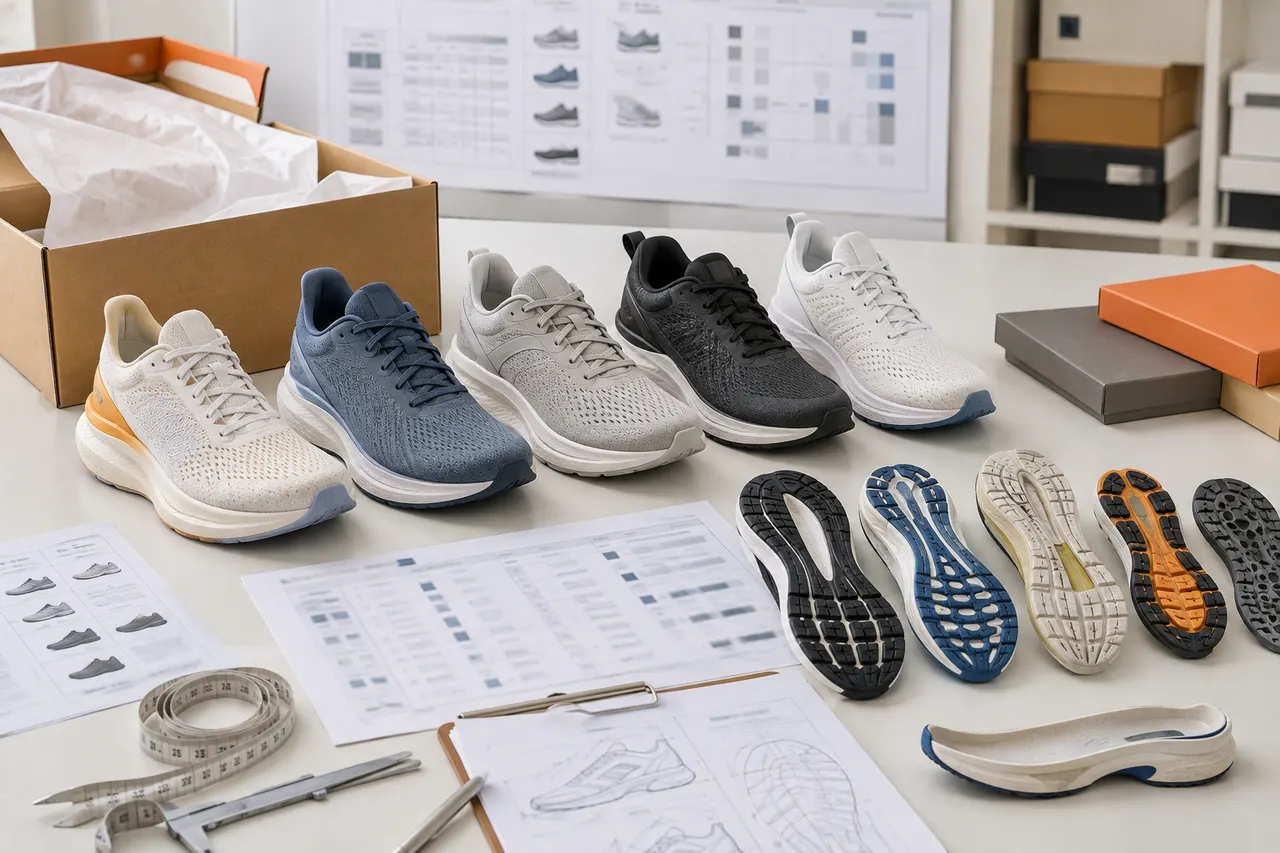
When selecting DHgate Nike running shoes, the easiest mistake to make is not whether they "look the part," but rather failing to evaluate purpose, foot shape, size evidence, and QC photos under a single set of criteria. The value of a spreadsheet lies in centralizing scattered product pages, size information, image links, and notes, enabling you to first filter out clearly unsuitable styles before deciding whether to ask the seller for additional details.
This article is suitable for people who already know they want Nike-style running shoes and are willing to verify items one by one using a spreadsheet. It is not for those who want guaranteed authentic products, professional racing shoe performance certification, or medical-grade arch support recommendations. Brands, prices, inventory, shipping costs, seller status, and image availability may change; before ordering, you should refer to the actual product page you open, warehouse QC photos, and the platform settlement page. The verification date is recommended to be recorded as the day you view it.
Determine Running Distance, Surface, and Foot Shape Needs First
Before opening the spreadsheet, write down your needs clearly. Running shoes are not selected based only on appearance; distance, surface, and foot shape will directly affect which evidence you should prioritize.
If you primarily use them for daily commuting and short-distance jogging, you can prioritize upper support, heel stability, and outsole wear-resistant patterns. If you plan long-distance running, you need to be more cautious, because tables and product images usually cannot prove true cushioning lifespan, resilience material grade, or long-term stability. For high-intensity training, it is recommended not to make decisions based solely on appearance photos.
You can first record these items:
Usage scenario: commuting, walking, sprinting, jogging, gym, or light training
Distance range: daily walking, 3-5 km, over 10 km, or occasional wear
Surface type: indoor, asphalt, concrete, plastic track, or mixed surfaces
Foot shape characteristics: normal foot, wide foot, high instep, low arch, prone to heel rubbing
Risk tolerance: can you accept return/exchange trouble, size discrepancies, minor workmanship differences
The key here is to first eliminate unsuitable scenarios. For example, wide-foot users should not only look at shoe length size; they need to simultaneously check toe box space, last width, and upper wrapping. People who run regularly should not only look at midsole thickness, because thick soles in pictures do not equal actual cushioning performance 🏃.
Clarify the Information Boundaries the DHgate Spreadsheet Can Help Filter
The spreadsheet on dhgate-spreadsheet.net is better suited for "candidate list management" and "evidence link organization," rather than confirming product authenticity, inventory stability, or final received quality for you. You can use it to improve filtering efficiency, but you cannot treat the names, images, or notes in the table as permanently valid facts.
It typically helps you with three things. First, it allows you to compare similar products in one place, avoiding jumping back and forth between multiple pages. Second, you can quickly view product names, categories, image clues, size ranges, or notes fields. Third, it serves as a starting point for saving your verification records, making it convenient to later put product page screenshots, QC photo links, seller replies, and order time in the same row.
But it also has boundaries:
The table cannot guarantee that product pages remain accessible
The table cannot guarantee that the seller's current inventory, prices, and shipping remain unchanged
The table cannot replace warehouse QC photos
The table cannot prove the true performance of shoe materials, air cushions, foam, or support structures
The table cannot replace verification of destination country import restrictions, taxes, and customs requirements
Therefore, the correct usage is not "see Nike running shoes and order immediately," but rather to use the spreadsheet as the first layer of filtering, then gradually confirm with the product page, real photos, and QC photos.
Build a Candidate List by Series Name, Size Range, and Upper Structure
When building a candidate list, don't add too many models at once. It is recommended to first select 5-10 links that seem to match your purpose, then compare them using the same set of fields. Too many will cause you to overlook key differences, and you will end up being led by image style.
You can filter in the following order:
First look at the series name or appearance category to confirm that it is the running shoe style you want, not basketball shoes, casual shoes, or training shoes.
Then look at the size range to confirm it covers your usual size, and prioritize pages that provide centimeter foot length reference.
Next, look at the upper structure, distinguishing mesh, fabric, synthetic leather overlays, and thick padded collar.
Finally, look at notes and image links, marking which products have more real photos or QC references.
If you have wide feet or high instep, upper structure is especially important. Large areas of hard overlays may provide more support but can also limit forefoot space. Soft mesh is more adaptable to foot shape, but if the shoe body is too soft, lateral stability may be insufficient during running. The spreadsheet can only help you locate candidates; the real judgment still relies on subsequent image evidence.
Filter Field | What to Record | Why It Matters |
|---|---|---|
Purpose | Commuting, jogging, gym, or fashion | Avoid using fashion shoes as professional running shoes |
Size | EU/US/CM complete? | Reduce size selection errors |
Upper | Mesh, fabric, overlays, collar thickness | Affects fit, breathability, and risk of pressing the instep |
Image Evidence | Product photos, real photos, QC photos all available? | Judge version consistency and workmanship risk |
Pending Confirmation | Width, insole length, weight, color difference | Decide whether to ask the seller or delay purchase |
Verify Toe Box Space, Last Width, and Size Chart Evidence
When judging running shoe size, you cannot just rely on "if I usually wear size 42, I'll buy size 42." Toe box height, forefoot width, and upper elasticity vary among different shoe models and affect actual fit. Especially for Nike-style running shoes, models that look similar may differ greatly in last and toe shape.
Before ordering, you should verify at least three types of evidence.
First, check whether the product page provides a size chart, and confirm whether the chart is insole length, recommended foot length, or a generic conversion. Insole length is usually closer to actual judgment than foot length, but you still need to leave room for toe movement.
Second, look at the toe shape in the pictures. Models with pointed toes, narrowed forefoot, or hard upper overlays are less friendly to wide feet. Models with a large mesh forefoot area and a rounder toe outline are usually more worth further verification for wide-foot users.
Third, ask the seller or warehouse to confirm measurable information. The most useful are insole length, widest point of the forefoot, shoe box size label, and inner size label. Don't just ask "true to size," because that answer is too vague and cannot solve your specific foot shape issue.
If your foot length falls exactly between two sizes, prioritize purpose. Running and long periods of walking generally require more toe space; if only for occasional fashion wear, a tighter fit is more acceptable, but the risk of rubbing increases 👟.
Inspect Visible Details of Midsole, Outsole Pattern, and Heel Fixation
The spreadsheet and product page images cannot prove the true performance of running shoes, but they can reveal some visible risks. What you should look at is not promotional language, but whether the images support basic judgment.
For the midsole, focus on whether the left and right shoe thickness is consistent, whether the sidewall lines look natural, and whether the foam edges have obvious deformation. A thick midsole looks comfortable, but if the edges in the image are already tilted, clearly dented, or the left and right heights are inconsistent, you should be more cautious.
For the outsole, focus on pattern depth, clear segmentation, and whether the forefoot flex zone is reasonable. Shoes for commuting can accept more casual patterns; for wet surfaces or long distances, shallow outsole patterns increase the risk of slipping and wear.
For the heel, focus on collar padding, heel cup shape, and pull tab area. A heel that is too soft may cause the foot to slip while walking; a heel that is too hard may cause rubbing. If the image shows the three-dimensional heel structure, lining, and collar thickness, it is more useful than a simple side view.
These details can only help you identify obvious risks and cannot replace actual fit experience. If the seller's page only provides highly retouched display images, with no real photo angles and no subsequent QC photo links, it is recommended to put it in the "pending evidence" category rather than "ready to order."
Compare Version Consistency Among Product Page, Real Photos, and QC Photos
Version consistency is the most overlooked step in the filtering process. Many people only look at the main product image and only realize when the QC photos arrive that the tongue label, outsole color, side lines, or shoe box information do not match expectations.
You can compare in three layers: "product page expectation, real photo reference, QC warehouse photo." The product page establishes what you think you will receive; real photos help determine whether the seller has actual shipping samples; QC photos are evidence of the current warehouse state of your pair.
Focus on comparing these positions:
Are the upper color and mesh texture consistent?
Are the positions of tongue, heel, insole, and outer logos significantly different?
Are the left and right midsole heights, outsole patterns, and heel shapes symmetrical?
Does the shoe box size label and inner size label match your order size?
Are there obvious flaws in lace holes, stitching, glue marks, and collar lining?
If the difference between QC photos and product page is only slight color difference due to lighting, you can continue to judge with more angles. If the structure, color blocking, or size labels are obviously inconsistent, you should prioritize asking for clarification or requesting processing, rather than rushing to consolidate shipping 📦.
Record Missing Evidence and Decide to Ask, Change Model, or Wait
A good spreadsheet habit is not just saving links, but writing down uncertainties. The more missing evidence, the higher the communication cost after purchase.
You can categorize each candidate product into three groups. Those with sufficient evidence go into the final candidates; those missing key size or QC information should be asked about further before deciding; those with only display images and no effective details should be put on hold or changed.
Situation | Recommended Action | Reason Not to Order Directly |
|---|---|---|
Has size chart, real photos, and usable QC references | Add to final candidates and record verification date | Still need to refer to actual order page |
Missing insole length or width information | Ask seller or wait for QC measurements | Size risk cannot be solved by appearance |
Only retouched main images | Wait or change to a model with real photo evidence | High risk of warehouse arrival discrepancy |
Product page inaccessible or empty | Remove from list | Cannot form effective purchase judgment |
QC photos show obvious inconsistency | Request supplement, return/exchange, or change product | Higher processing cost after consolidation |
When asking, be specific. For example, "Please confirm the insole length in centimeters for EU 42" and "Can you provide a top view of the forefoot?" are more useful than "Is the quality good?" The vaguer the seller's answer, the more you should keep a risk flag.
Organize the Final Purchase List and Save Verification Evidence
The final list does not need to be complicated, but it must allow you to look back and understand why you chose this shoe. It is recommended to save at least the product name, link, size, purpose, verification date, key evidence, and pending risks for each row.
Do one last check before ordering:
The product page still opens, and the name, style, and size have not changed
The current price, shipping cost, inventory, and estimated route are as shown on the settlement page
Size evidence has been saved, including size chart, insole length, or seller reply
The QC angles you need have been listed for easy checking upon warehouse arrival
Risks unsuitable for consolidation have been considered, such as package volume, total value, customs documents, and damage risk
For products like running shoes, the safest decision is not to pursue the lowest price, but to consider "purpose match, size evidence, image consistency, and after-sales handling" together. The spreadsheet can help you reduce ineffective browsing, but whether you ultimately purchase should depend on whether you can obtain enough evidence to complete the next step.
If the evidence is complete, the size logic is clear, and the QC photos match the product page, you can proceed to ordering and warehouse inspection. If key images are missing, the size answer is vague, or version differences are obvious, waiting is usually cheaper than risky shipping. The saved money may come from fewer wrong sizes, fewer returns/exchanges, and fewer repeated international shipping fees; the increased risks include longer waiting times, inventory changes for popular models, and price adjustments during inquiry. Those best suited for this method are buyers willing to keep records, accept the verification process, and use running shoes for commuting or light exercise. It is not recommended for professional training, competition use, or those who cannot accept quality fluctuations to rely on the spreadsheet for direct purchase. ✅
Agent Platform Shopping FAQ
1. What is the reason for using a spreadsheet on dhgate-spreadsheet.net?
Since agent platforms generally do not display products directly, you need a spreadsheet to find items you like and get purchase links. You can also ask for help on Reddit or Discord, where recommended products are often good, but the purchase process can be slow. These spreadsheets are usually compiled from long-term collection of information from these platforms.
2. What types of products can be found in the spreadsheet on dhgate-spreadsheet.net?
The website spreadsheet covers shoes, clothing, bags, accessories, jerseys, perfumes, hats, scarves, belts, and various household items.
3. What product types are available on dhgate-spreadsheet.net?
The website offers a wide range of product categories, including shoes, T-shirts, sweaters, hoodies, jeans, sweatpants, shorts, beach shorts, factory clearance items, down jackets, baseball shirts, shirts, hats, jewelry, bags, electronics, sunglasses, socks, underwear, and trendy collectibles.
4. How do I view QC photos on dhgate-spreadsheet.net?
When viewing QC photos, you should pay attention to the specific features of the purchased product. For example, shoes need to be checked in several key areas, such as the toe, heel, and tongue, looking at stitching, shoe construction, and tongue thickness to confirm if it is a high-quality product. For clothing, you should check details such as the neck label, logo embroidery, fabric, and the evenness of the collar and cuffs.
5. How do I search for the product I want to buy on dhgate-spreadsheet.net?
You can search using a single keyword or go directly to the category page, where products are also organized by brand. Longer search terms usually return fewer results than shorter ones but are more precise. For example, you can search "Air Force 1 White," "sneakers," or just "Air Force 1."
Browse our latest products and find your next favorite item.